It is 8.40 pm in a flat in Sushant Lok. The books are open. Aarav, Class 8, has stared at the same page of Geography for twenty minutes. His mother asks how much is left. He shrugs. Ten minutes later both are shouting, and the page is still not done.
Almost every parent in Gurugram has lived some version of that evening. The child is not lazy. Something specific is stopping them, and "just sit and study" does not touch it.
This guide is about finding that something. Fair warning: it is slow work. Motivation does not return in a weekend.
Why does my child not want to study?
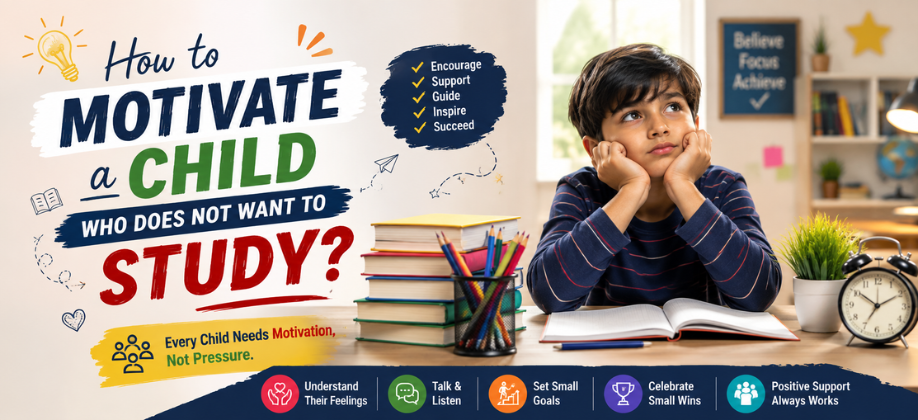
Children stop wanting to study for a handful of reasons: the work bores them, the work is too hard, they are scared of failing again, they are tired of being compared to someone, or they see no point in any of it. Laziness is almost never the real answer. Find the actual reason before you try any fix.
All five look the same from outside. Underneath, each one is different, and so is the fix.
| Real reason | What you see at home | What helps |
|---|---|---|
| Boredom | Works fine for subjects they like, avoids one or two | Change the format: quiz aloud, use past papers, tie the topic to what they follow |
| Work is too hard | Opens the book, does nothing, gets angry when asked why | Go back two chapters and rebuild. Marks will not move until that gap closes |
| Fear of failing | Studies secretly, or claims they did not study at all | Stop reacting to marks. Praise the attempt. Let small failures pass quietly |
| Comparison fatigue | Goes quiet when a cousin's result is mentioned | Ban comparisons at home, including the flattering ones |
| No clear goal | "Why do I even need Chemistry?" A real question, not rudeness | Answer it honestly, and link the subject to something two years ahead |
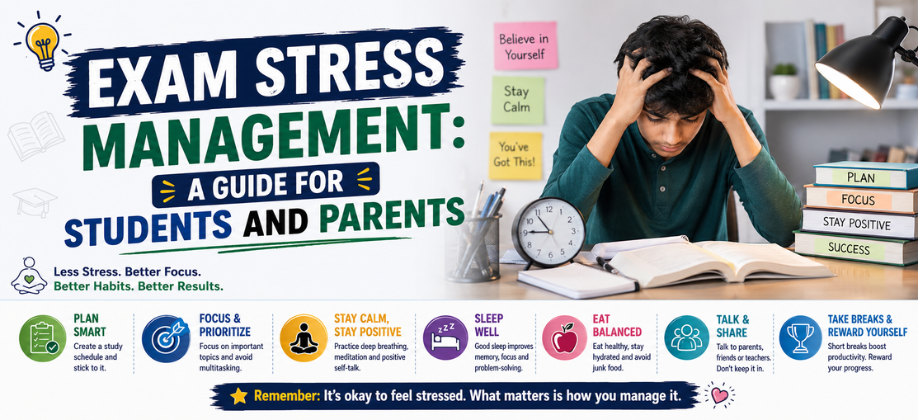
One caution. If the avoidance covers every subject for months, with poor sleep or crying, that is not a motivation problem. Talk to the school counsellor. Our guide on managing exam stress covers where normal pressure ends.
How to find out which reason it is
Sit beside your child for three questions and say nothing. Watch the first two minutes. A bored child starts and drifts. A stuck child reads the question again and again. A frightened child does not pick up the pen at all. That single observation tells you more than any conversation will.
Talking helps too, but not during a fight or straight after a result. Try it in the car or on a walk, when nobody has to make eye contact.
Questions that get a real answer
- "Which subject feels the worst right now?" Much better than "why don't you study".
- "When you open the book, what happens in your head?" Children often describe blankness, which usually means difficulty, not boredom.
- "Is there anything in class you stopped asking about because it felt too late?" Old gaps hide here.
Ask sideways, not straight
Children rarely answer direct questions about themselves. Ask about the class instead: "does anyone else find trigonometry hard?" They will tell you about a friend, then about themselves. Keep your face neutral, or the conversation ends there.
Building motivation with small wins
Shrink the task until refusing it feels silly. Fifteen minutes, one exercise, one page. A child who has been failing for months does not need a two-hour plan. They need one thing they can finish today, so "I did it" becomes true again. Confidence comes from finishing, not from being told to try harder.
What works for most children in Classes 6 to 10:
- Set a timer for fifteen minutes. When it rings they may stop, even mid-question. Keep that promise or the whole thing collapses.
- Start with a question they can already do. An easy sum gets the pen moving. Starting with the hardest one is how study sessions die in five minutes.
- Let them tick the work off on a paper list near the table. Paper beats a phone app here.
- Add five minutes a week, not thirty. By the sixth week, fifteen has quietly become forty.
If sitting down is itself the battle, the setup matters: table facing a wall, no bed within reach, phone in another room. We have a checklist for setting up a study space at home, small flats included.
Giving your child some real choice
Offer choices inside a boundary you have already fixed. The study hour is not negotiable; what happens inside it can be. Which subject first, which chapter, table or floor, 7 pm or 8.30 pm. Children who get to choose something about the task argue about it far less.
Safe choices to hand over:
- Order of subjects. Let them start with the one they like. Ending on a hated subject beats starting on it.
- Time slot, picked once a week and then fixed. Choosing daily becomes daily negotiation.
- Break style. Ten minutes of walking, food or music. Not Instagram, which never ends in ten minutes.
Do not hand over whether studying happens at all. That is not choice, it is dropping the boundary, and children read it as you giving up. Screen rules stay fixed too, as our note on screen time and studies explains.
How to take shame out of studying
Stop treating a low mark as a fault in your child's character. Shame makes children hide work, lie about tests and stop trying, because not trying feels safer than trying and failing in public. Separate the person from the paper. Discuss the mistakes on the answer sheet and leave your child out of it.
Rules that reduce shame quickly:
- Never discuss marks in front of guests, relatives or the driver. Children remember those moments for years.
- React to a bad result with a question, not a verdict. "Which part went wrong?" beats "this is what happens when you waste time".
- Drop "you are careless". Say "you lost four marks to sign errors, three times this term". One is an insult, the other is fixable.
- Tell them about a subject you found hard at school. It makes struggling normal instead of shameful.
A child who is afraid of being wrong will stop trying long before they stop being able.
Fear is often subject-specific. A child can be relaxed in History and frozen in Maths. If yours says "I am just bad at Maths" in a flat voice, read our piece on maths anxiety in children first.
Linking study to what your child already likes
Connect the subject to something they already spend time on, so the work stops feeling invented by adults. Cricket averages are percentages and ratios. Gaming leads into Python and logic. Cooking is chemistry with better results. This will not work for every chapter, but it works often enough to be worth trying.
Examples that hold up
- A child who follows the IPL can work out strike rates and required run rates. That is Class 7 and 8 arithmetic, done willingly.
- A child glued to the phone can be pushed towards how apps are built. Our guide to Python for school students is a fair start.
- A child who likes drawing can redraw Biology diagrams from memory, the fastest way to learn them.
- A child who argues constantly is a debater. Give them Civics and Economics case questions to argue on paper.
Answer "why do I need this" honestly too. Sanya in Class 9 asked why Trigonometry mattered. "You may never use it directly, but it is the gate to Physics in Class 11" is a fair reply. Children can handle honesty. They cannot handle being told everything is equally important.
Should you praise effort or marks?
Praise the specific effort, not the number. Marks depend on the paper, the checker and the day. Effort is the part your child controls, so that is the part worth rewarding. Name exactly what they did, because vague praise like "good boy" teaches nothing about what to repeat.
Swaps to start using tonight:
- Instead of "92, excellent", try "you finished the whole exercise without opening the answer key".
- Instead of "you are so intelligent", try "you stayed with that question for fifteen minutes before getting it".
- Instead of "why only 68", try "which two questions cost the most marks, and do you know why now?"
- Instead of silence after a low mark, name one thing that improved.
Let them overhear it
Tell your spouse, on the phone, within your child's hearing, that Diya worked steadily for forty minutes today. Overheard praise lands harder than praise given directly.
What to stop doing: bribes, comparisons and lectures
Three common moves make motivation worse: paying for marks, comparing your child to other children, and giving long lectures. All three feel productive in the moment. All three teach your child that studying is done for you, or to avoid you, rather than for themselves.
Bribes
Rs 500 for 90 per cent works once. Then the price rises, and the child studies only for the payment. Worse, they duck hard subjects, because the money is tied to the number. A small celebration after long effort is fine. A price list is not.
Comparisons
"Your cousin scored 95" produces nothing but resentment. Even praise by comparison, such as "you did better than Rohan", teaches your child that their worth sits on someone else's result. Compare them only to their own last paper.
Long lectures
After about ninety seconds, children stop hearing the content and start waiting for the end. Say the important thing in three sentences and stop. Repeating it for twenty minutes does not add weight. It removes it.
The ninety-second rule
Decide the one sentence you want your child to remember. Say it, then leave the room. Silence after a short point does more work than ten more minutes of explaining.
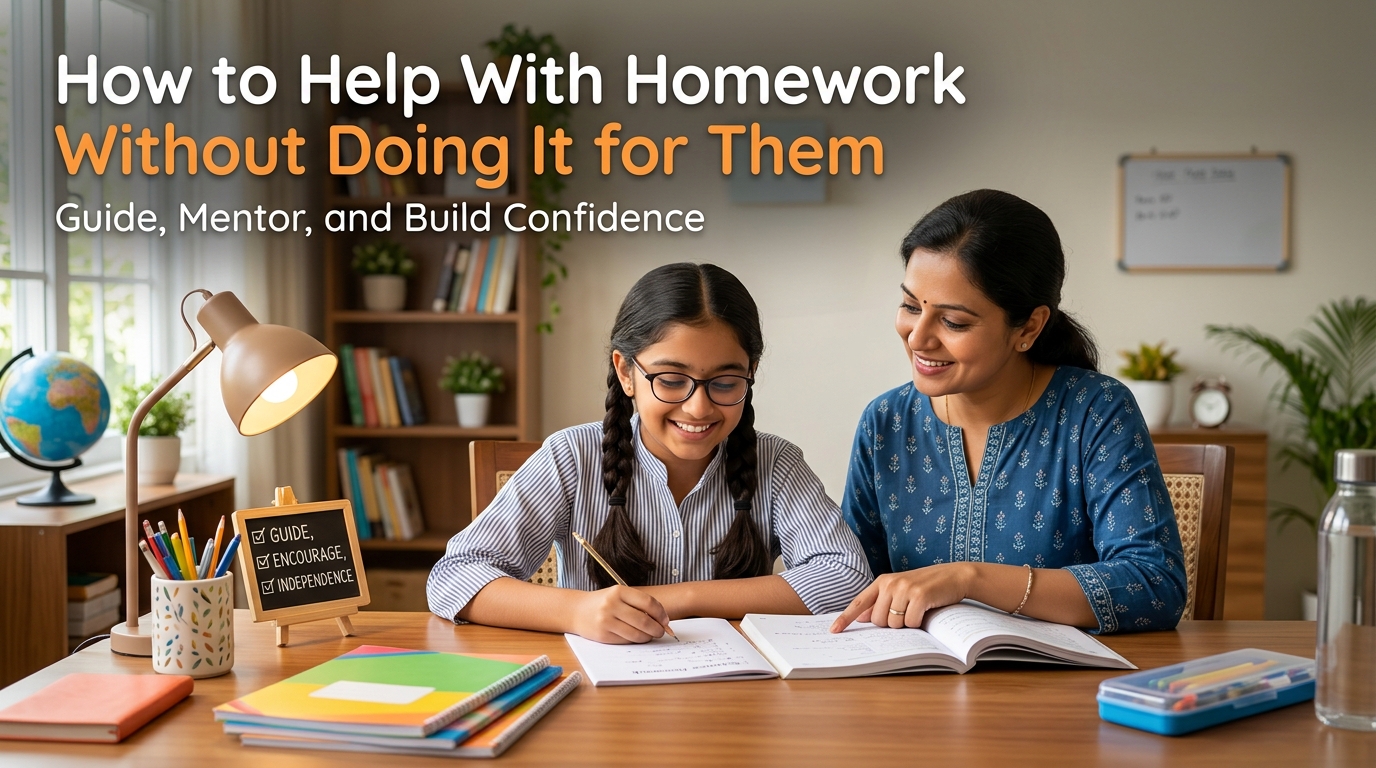
One more habit to drop: finishing the homework yourself at 10 pm. Our guide on helping with homework without doing it shows where the line sits.
What to do this week
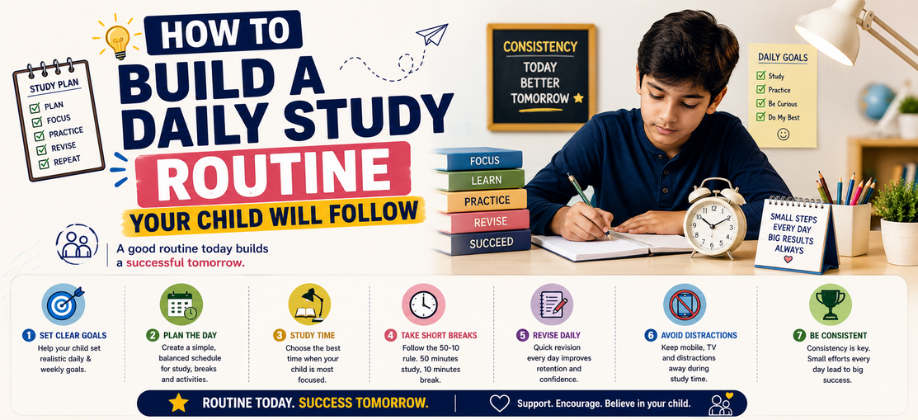
Pick two changes, not eight. Trying everything at once fails, and your child will notice the sudden new personality. Find the real reason first, then shrink the daily task. Give it three or four weeks before judging anything, because habits shift before marks do.
- Sit beside your child for three questions and just watch. Note which of the five reasons it looks like.
- Cut the daily target to fifteen honest minutes, and keep the promise when the timer rings.
- Let them choose the subject order and the time slot for the week.
- Go one full week without mentioning any other child's marks.
- Replace one piece of praise a day with something specific about what they did.
- Have one calm conversation, away from the study table, about the subject that feels worst.
If the cause is difficulty rather than attitude, encouragement alone will not fix it. A patient teacher who starts two chapters back will. Most families in Gurugram, from Palam Vihar to Golf Course Road, pay somewhere between Rs 8,000 and Rs 18,000 a month for one-on-one tuition. Before hiring anyone, read the signs a child actually needs a tutor, then see how learning models and fees work at Dheeru Home Tuitions.
Aim for calmer evenings than last month. A child who is not fighting you has energy left over for the book.