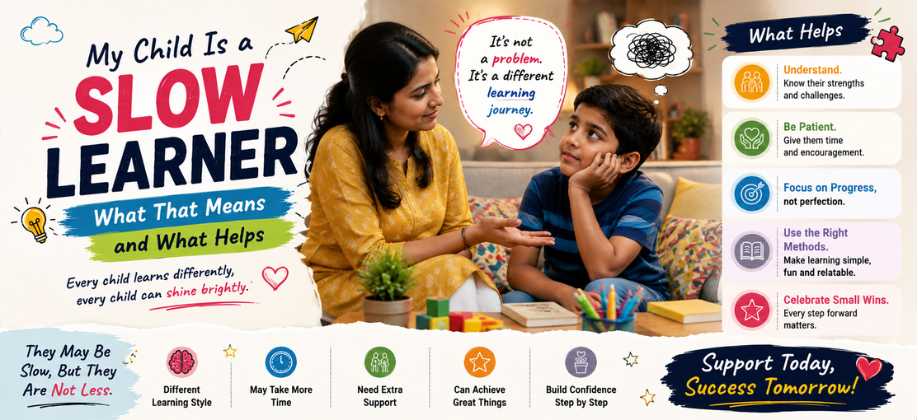
At the Class 6 parent-teacher meeting, the teacher says it kindly. "Aarav is a slow learner. He just needs more time." His mother nods and drives back to Sohna Road feeling like something has finally been explained.
Nothing has been explained. "Slow learner" is not a diagnosis. It is a description of what one teacher can see from the front of a room with forty children in it.
The useful question is not whether your child is slow. It is why the work takes longer than it should. That question has answers, and most of them can be fixed.
What does "slow learner" really mean?
"Slow learner" is a school label, not a medical or psychological one. It usually means a child needs more time and more repetition than the class average to reach the same understanding. It says nothing about intelligence and nothing about the cause. Two children with the same label often have completely different reasons.
Pace and ability are not the same thing
Pace is how quickly a child gets there. Ability is whether they get there at all. A child who takes forty minutes over six sums and gets all six right has ability. What they lack is fluency, and fluency is built by practice.
School timetables reward pace, so slow-and-correct looks like weak from a distance. Ananya in Class 9 may understand chemical equations perfectly and still finish last, because she balances every one twice. No examiner gives marks for finishing early.
| What you see at home | What it often actually is | First thing to check |
|---|---|---|
| Takes twice as long over ordinary homework | Missing basics from two or three classes earlier | Test three topics from two classes below |
| Copies the board wrongly, headaches after school | Uncorrected short sight | A proper eye test, not the school camp |
| Says "haan?" often, turns one ear towards you | Mild hearing loss after ear infections | A hearing check with an ENT |
| Understands you, but not the textbook | Language of instruction, not the subject | Ask the same question in your home language |
| Fine at home, blank in the test | Anxiety, not weak preparation | Time an easy paper at the dining table |
Why gaps from earlier classes make a child look slow
Most children called slow in Classes 6 to 10 are not slow at all. They are missing something from three or four years earlier. Maths and science build in a straight line. If fractions never became solid in Class 5, then ratios, percentages and algebra all feel impossible, however hard the child tries.
Kabir in Class 8 was failing algebra. Two sessions in, the real problem showed up: negative numbers confused him and his tables above seven were guesswork. Five weeks on that, and algebra stopped being a mystery. He was never slow. He was building on sand.
Gaps form quietly: a long stretch of online classes, a mid-year school change, a three-week illness, or a board switch that raised the questioning.
Test backwards, not forwards
Do not drill the current chapter harder. Give your child twenty questions from two classes below and watch where they slow down. That point is where teaching should begin, and it is often two years behind where the school is.
Getting vision, hearing and sleep checked first
Before you buy a single extra workbook, test your child's eyes and ears and look honestly at their sleep. Uncorrected short sight, mild hearing loss and five hours of sleep will each make a bright child look slow. All three are cheap to check and usually simple to fix.
Vision trouble often starts between eight and twelve, exactly when notes get longer and board writing gets smaller. Watch for a child who holds the book very close, tilts the head, or gets headaches only on school days.
Hearing is missed even more often. A child with mild loss hears the teacher from the front row and loses her from the fourth. They are not daydreaming. They catch most of the sentence and guess the rest.
Then sleep. A Class 9 student in Sushant Lok who finishes coaching at nine, scrolls till midnight and catches the bus at half past six runs on five and a half hours. Anyone would look slow on that.
Is the language of instruction the real problem?
If your child understands a concept when you explain it in Hindi but not from the English textbook, the difficulty is language, not the subject. This is common in Gurugram, where many families speak Hindi, Punjabi or Bengali at home while school runs in English from Class 1.
The giveaway is word problems. A child who solves twelve division sums and then gets the word problem wrong has not failed at division. They failed to read what was being asked. The same happens in science, where words like "evaporate" and "as a result" carry the meaning.
- Explain the idea in your home language, then ask your child to say it back in English. The second step matters more.
- Keep a two-column page at the back of each notebook: English term on the left, your own plain meaning on the right.
- Ask your child to read the question aloud and underline the instruction word: find, prove, compare.
- Build reading through things they enjoy, not improving books nobody opens twice.
When anxiety looks like slow learning
A child who is afraid of being wrong works slowly on purpose, because slow feels safe. They reread the question four times, avoid starting, check the same sum again and again, and hand in half a paper. At home, with nobody watching, the same child finishes in half the time.
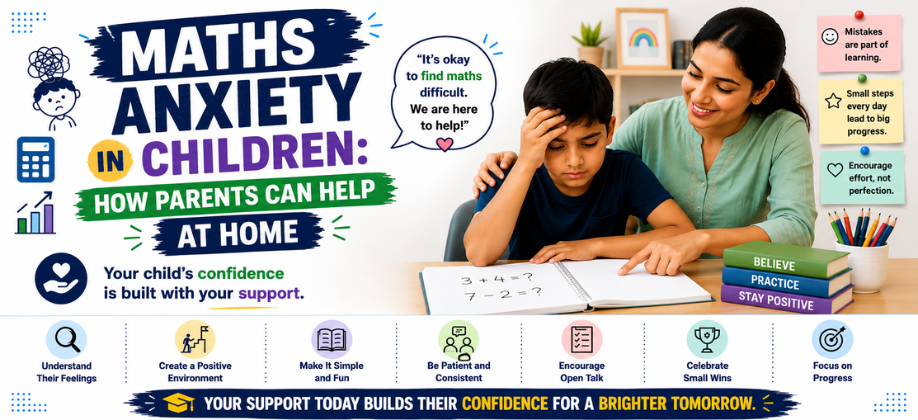
You can spot this. The stomach ache appears on test mornings and vanishes by lunch. The child answers correctly at the dining table and writes nothing in the exam hall. Maths brings it out most often, which is why maths anxiety in children deserves its own conversation.
A child who is scared of being wrong will always look slower than a child who is willing to be wrong.
The fix is boring and it works. Let mistakes be ordinary in front of you, stop marking their notebook in red, and practise with a timer at home so a clock stops feeling like a threat.
How to find out what is actually going wrong
Spend two weeks diagnosing before you spend money on teaching. Watch your child work, test topics from earlier classes, check the eyes and ears, and ask the class teacher specific questions. A tutor who opens the current chapter without any of this will waste your months and your fees.
A simple diagnostic order
- Sit through one homework session without helping. Note the exact moment your child stops, and what they were doing.
- Give a twenty-question paper of topics from two classes below, and mark it yourself.
- Book an eye test and a hearing test the same week. Do not wait for the school camp.
- Ask three questions from the current chapter in your home language and see whether the answers change.
- Ask the class teacher what your child does in the first ten minutes of her period, instead of settling for "he must work harder".
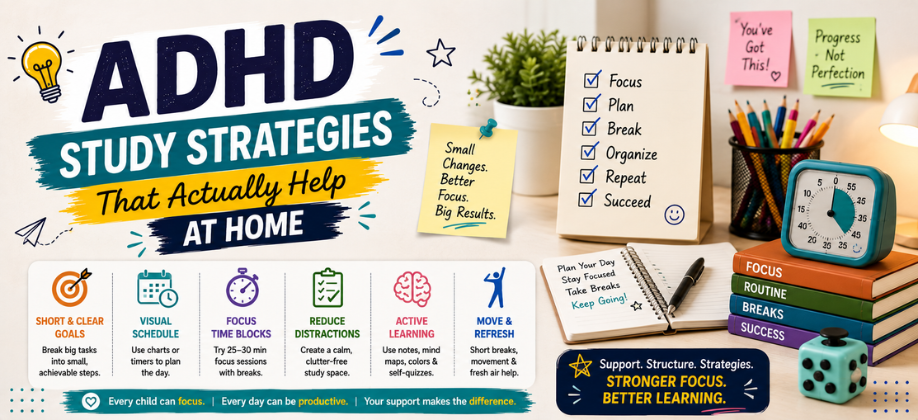
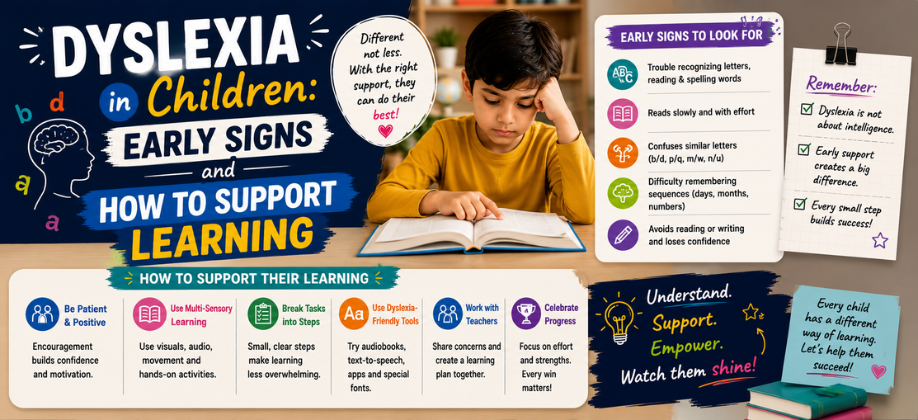
If reading itself is slow and effortful, or spelling stays chaotic past Class 4, look at the early signs of dyslexia before assuming laziness. If attention breaks down within minutes at both school and home, our post on ADHD and studying may fit better.
A formal assessment is done by a child psychologist, usually after a referral from your paediatrician or the school counsellor. CBSE, ICSE, IB and IGCSE all have provisions for assessed learning needs, but the paperwork changes, so check the official board website.
How to help a slow learner at home
Small daily changes beat a big weekend plan. Keep sessions short, fix one gap at a time, ask your child to explain each step back to you, and stop comparing them with cousins. Praise finished work and honest effort rather than speed, because speed is the one thing they cannot control yet.
- Work in twenty-five minute blocks with a real break between them. A finished short block beats a two-hour sitting that falls apart.
- Fix one thing at a time. Three weeks on tables and negative numbers beats skimming four chapters.
- After every solved sum, ask "show me how you got that". Explaining out loud is where understanding gets tested.
- Do not correct their notebook silently after they sleep. They will never learn to catch their own mistakes.
- Give extra time openly, then cut it by five minutes each fortnight. Speed comes after confidence, never before it.
Stop using the word in front of them
Children repeat the labels they hear. Once a child says "I am a slow learner" about themselves, they stop attempting hard questions, because failing would prove the label true. Say "you are still building this" instead. It is more accurate and it keeps them trying.
When does one-on-one teaching change things?
One-on-one teaching helps most when the real problem is gaps, pace or confidence. A tutor beside your child can stop at the exact step where things break, go back three years without embarrassing anyone, and let the child think without forty pairs of eyes waiting.
Be honest about the limits. Tuition will not fix uncorrected vision, five hours of sleep, or an undiagnosed learning difficulty. A tutor who simply finishes the homework each evening makes things worse: the gap stays hidden while the notebook looks perfect.
What to look for
- A tutor who tests earlier classes in week one instead of opening the current chapter on day one.
- Someone patient enough to explain the same idea three ways without sighing. Watch for this in the demo.
- A written plan listing the specific gaps with a rough date for each. This is the idea behind our Back-on-Track and one-on-one programs.
- Short, regular feedback, not a monthly "she is improving".
On money, most families in Gurugram pay somewhere between Rs 600 and Rs 1,500 per session for one-on-one home tuition, depending on class, subject and the tutor's experience. Classes 11 and 12 science sits at the higher end. Our breakdown of what parents actually pay has more.
What to do over the next two weeks
Do the cheap checks first and the teaching second. In week one, book an eye and ear test, watch two homework sessions without helping, and set a paper from two classes below. In week two, meet the class teacher and decide whether your child needs a tutor, a routine change, or an assessment.
- Book the eye test and the hearing test. Both together cost less than one month of tuition.
- Sit quietly through two homework sessions and note where the pen stops.
- Set twenty questions from two classes below and mark them yourself.
- Fix a sleep time and hold it all seven nights, Saturday included.
- Meet the class teacher with two specific questions, not a general "how is he doing".
- List the three gaps you found, worst blocker first.
- If you go for a tutor, watch how they handle a wrong answer. A free demo session tells you more than any brochure.
Still unsure whether outside help is needed? Our post on signs your child needs a home tutor lists three signs that they do not.
The word "slow" tells you nothing about where your child got stuck. Two weeks of looking properly will.