Exam Schedule Active: JEE Mains 2027 Session 1 dates are confirmed for January 22 to 30, 2027. The official registration portal opens late October 2026 at jeemain.nta.nic.in.
Every October, a familiar conversation echoes across homes in Gurugram. A Class 11 student mentions JEE. Parents wonder whether their coaching institute covers enough ground, or if additional academic support is needed. The student has attended lectures since July, yet there is a lingering realization that structured self-study has not truly crystallized. November arrives, and without a definite roadmap, precious weeks slip away.
November is the month designed to fix this uncertainty, provided it is approached with discipline. The JEE Mains 2027 Session 1 exam dates are officially announced, leaving roughly 111 days until the first paper begins on January 22. Whether a Class 11 student builds a meaningful first attempt or merely experiences test anxiety depends almost entirely on what happens during November and December.
This comprehensive guide details exactly what a Class 11 student must accomplish across Physics, Chemistry, and Mathematics, month by month and week by week, starting November 3.
JEE Mains 2027: Confirmed and Expected Timelines
Before designing your weekly problem-solving quota, it is essential to review the official roadmap published by NTA:
| Milestone Event | Session 1 Details | Session 2 Details | Official Status |
|---|---|---|---|
| NTA Annual Examination Calendar | September 16, 2026 | September 16, 2026 | Confirmed |
| Official Information Bulletin | Last week of October 2026 | February 2027 | Expected |
| Online Registration Window | Last week of October 2026 | First week of February 2027 | Opening Soon |
| Application Submission Deadline | Fourth week of November 2026 | Last week of February 2027 | Expected |
| Advance City Intimation Slip | First week of January 2027 | Late March 2027 | Expected |
| Admit Card Release | Mid-January 2027 (3 days prior) | Early April 2027 | Expected |
| JEE Main Theory Examination | January 22 to 24 and 28 to 30, 2027 | April 2027 | Confirmed |
| Official Examination Buffer Date | January 31, 2027 | April 2027 | Confirmed |
| NTA Scorecard and Session Results | Mid-February 2027 | Late April 2027 | Expected |
Why November Is the Turning Point for JEE 2027
November does not mark the start of JEE syllabus exposure: it marks the point where preparation either becomes structured or collapses into passive listening. Most Class 11 students enrolled in coaching institutes have attended lectures since July. However, sitting through theory explanations and independently solving thirty multi-concept numerical problems per day are completely different disciplines.
Top percentile achievers who secure 99+ percentile in their Class 12 year forged their core problem-solving habits in November and December of Class 11, rather than relying on desperate crash courses later on. This is the period when mathematical fluency is established and complex physical mechanics takes root. If this foundation holds strong, Class 12 topics build seamlessly upon it.
Class 11 accounts for approximately 40% to 45% of every JEE Mains paper. An aspirant who neglects Class 11 fundamentals faces a permanent ceiling on their percentile that superior performance in Class 12 chapters cannot overcome.
JEE Mains 2027 Paper Pattern: What Class 11 Students Face
Understanding the question distribution and scoring rules helps students allocate examination time strategically:
| Subject | Section A (Compulsory MCQs) | Section B (Numerical Value Questions) | Questions Answered | Total Subject Marks |
|---|---|---|---|---|
| Physics | 20 Questions (Attempt All) | 10 Questions (Attempt Any 5) | 25 Questions | 100 Marks |
| Chemistry | 20 Questions (Attempt All) | 10 Questions (Attempt Any 5) | 25 Questions | 100 Marks |
| Mathematics | 20 Questions (Attempt All) | 10 Questions (Attempt Any 5) | 25 Questions | 100 Marks |
| Overall Combined Paper | 60 Questions | 30 Questions (Attempt 15) | 75 Questions | 300 Marks |
Scoring Rules: In Section A (MCQs), each correct response earns +4 marks, while an incorrect response incurs -1 mark. In Section B (Numericals), each correct response earns +4 marks with zero negative deduction for incorrect answers. The test duration is 3 hours (180 minutes) conducted in Computer-Based Test (CBT) mode. Because Section B carries zero negative penalty, students should systematically attempt their full quota of 5 numericals in each subject.
Class 11 Chapters With Maximum JEE Weightage: Subject by Subject
Class 11 chapters contribute between 40% and 45% of Physics, 40% of Chemistry, and 40% of Mathematics in every session. Analyzing five consecutive years of JEE papers reveals clear focal points:
Struggling with Rotational Motion or Calculus numericals? A verified Gurugram home tutor aligned with your school curriculum and JEE goals can double your problem-solving efficiency. Schedule a free demo session today.
Book Free DemoNovember to January: Month-by-Month Action Plan
This study blueprint is designed for Class 11 students balancing ongoing school commitments and coaching sessions with structured self-practice:
Physics Priority: Complete Classical Mechanics entirely, including Kinematics, Newton's Laws of Motion, Work-Energy-Power, Rotational Motion, and Gravitation. This single domain commands approximately 20% to 22% of the Physics section. Solve 25 quality numericals per chapter before advancing.
- Week 1: Kinematics along with Laws of Motion, focusing on friction, constrained motion, and pseudo forces.
- Week 2: Work, Energy, Power, and vertical circular motion dynamics.
- Week 3: Rotational Motion, mastering moment of inertia calculations, torque equations, and angular momentum conservation.
- Week 4: Gravitation and Fluid Mechanics fundamentals.
Chemistry Priority: Mole Concept and Chemical Bonding. These are high-yield foundational pillars: Mole Concept underpins all Physical Chemistry calculations, while Chemical Bonding directly determines your grasp of Inorganic Chemistry in Class 12.
Mathematics Priority: Conic Sections (the single largest Class 11 topic at 6% to 9% weightage) alongside Complex Numbers. Dedicate substantial time to coordinate geometry formulas and graphical transformations.
Daily Study Target: 5 to 6 hours of self-study outside coaching classes, distributed as 2 hours Physics, 2 hours Mathematics, 1.5 hours Chemistry, and 30 minutes active formula revision.
Physics: Thermodynamics, Kinetic Theory of Gases, Simple Harmonic Motion (SHM), and Waves. Thermodynamics overlaps with Physical Chemistry, allowing dual reinforcement. SHM problems become formulaic once standard differential equations are understood.
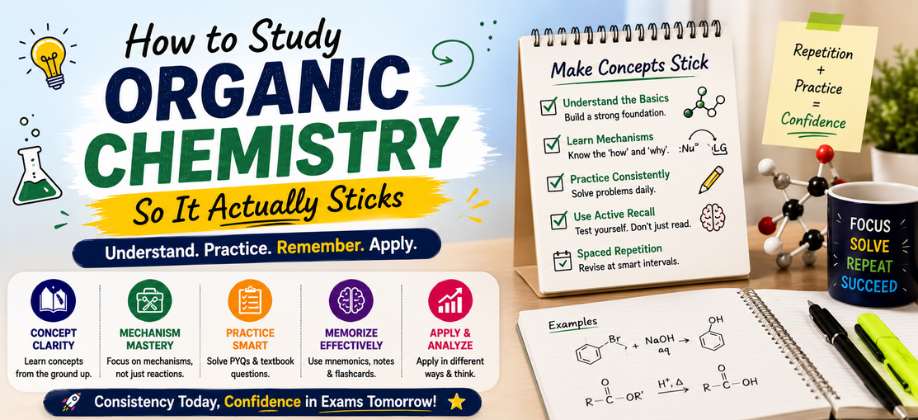
Chemistry: General Organic Chemistry (GOC), which serves as the intellectual backbone of all organic reactions. Spend at least ten dedicated days on resonance, inductive effects, hyperconjugation, and stability of intermediates. Follow this with Chemical and Ionic Equilibrium.
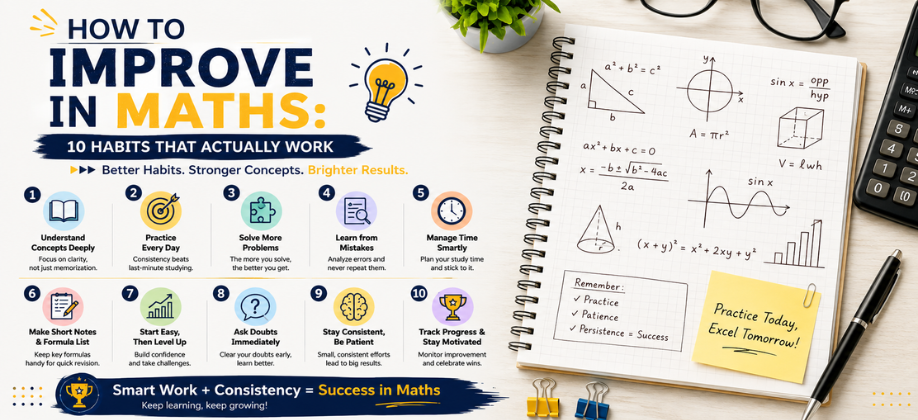
Mathematics: Sequences and Series, Permutations and Combinations, Binomial Theorem, and Trigonometric Equations.
- Weeks 1 and 2: Complete remaining Class 11 Physics units and Organic GOC principles.
- Week 3: Finish Class 11 Algebra and Trigonometry modules.
- Week 4: Attempt your first complete 3-hour timed JEE Mains mock test. Perform a deep post-test analysis categorizing every incorrect answer by conceptual error or calculation slip.
Target Milestones: By December 31, your Class 11 syllabus coverage should stand at 85% completion.
January provides roughly 21 days before the first examination shift. This month is reserved strictly for consolidating existing knowledge rather than starting unfamiliar textbooks from scratch.
- Week 1 (January 1 to 7): Solve 2 full-length JEE mock tests. Address conceptual weak points identified in December. Begin 2 accessible Class 12 chapters: Current Electricity in Physics and Solutions in Chemistry.
- Week 2 (January 8 to 14): Complete 2 additional timed mocks. Revise Class 11 high-yield formula sheets. Avoid starting new topics after this window.
- Week 3 (January 15 to 21): Conduct single-subject speed drills. Prioritize 8 hours of restful sleep daily. Cease heavy problem-solving by January 19.
- Exam Days (January 22 to 30): Maintain steady daily routines, review summary sheets, and approach each question with analytical composure.
Realistic Benchmark: For a Class 11 student, securing a 70 to 80 percentile score in January is an exceptional milestone that establishes a commanding springboard for Class 12.
A Realistic Daily Schedule for Students With Coaching
Balancing school hours, evening coaching batches, and personal problem-solving requires a disciplined timetable:
Morning: Mathematics Problem Solving
Dedicate two hours to complex mathematical derivations and algebra problem-solving while mental focus is highest. Solve without consulting answer keys prematurely.
School & Coaching Lectures
Participate actively in classroom sessions. Maintain a running notebook of every unverified derivation: these form your targeted evening discussion points.
Evening: Physics or Chemistry Practice
Alternate between Physics numericals and Chemistry reaction mechanisms. Aim for 20 solved problems per evening rather than re-reading notes passively.
Daily Doubt Logging
Record concepts that felt ambiguous during practice. Share this specific log with your private tutor or faculty member for immediate resolution.
Weekly Chapter Evaluation
Take a strict 90-minute timed chapter test under CBT conditions to track numerical speed and accuracy under time pressure.
Organic Chemistry Flashcards
Dedicate 90 minutes every weekend to reviewing reaction mechanisms, stability orders, and reagent behavior to build permanent recall.
Coaching Centre Plus Home Tutor: Does the Combination Work?
Gurugram is home to premier coaching institutes including FIITJEE, Aakash, Allen, and Vidyamandir Classes. Most Class 11 aspirants are already enrolled in an institute. The dilemma parents frequently evaluate is whether adding a personalized home tutor alongside coaching adds genuine academic value.
What Large Coaching Centers Provide
What a Dedicated Home Tutor Solves
This dual arrangement proves most impactful for two categories of students: those experiencing a specific conceptual bottleneck in Physics or Mathematics that coaching faculty cannot pause for, and high-performing students aiming to push their percentiles from the 92nd to the 99th band through specialized mentoring.
A home tutor does not replicate the coaching lecture. Instead, the tutor's role is sharply focused: eliminate the specific doubts accumulated during the week, verify step-by-step problem accuracy, and ensure the student develops independent problem-solving stamina between sessions.
Common Mistakes Class 11 JEE Students Make in November
What to Do This Week Before November Begins
- Bookmark the registration portal: Visit jeemain.nta.nic.in starting late October to ensure immediate registration once the application window opens.
- Conduct an honest chapter audit: List all Class 11 chapters across Physics, Chemistry, and Maths, marking each as Mastered, Partially Completed, or Unvisited. This audit dictates your exact November study sequence.
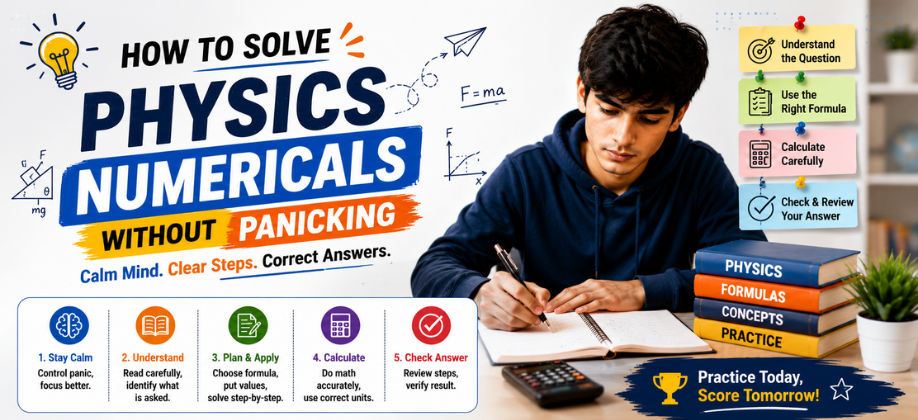
- Build the daily study habit immediately: Do not wait for November 1 to begin. Establish a 3-hour daily problem-solving routine this week and scale it to 5 hours by November 3.
- Examine the JEE Mains 2026 paper: Download the previous year's official question paper to study question terminology, numerical section formats, and concept integration before starting your chapter review.
The January 2027 attempt represents a Class 11 candidate's earliest opportunity to experience a national computer-based examination under real conditions. No Class 11 student is pressured to clear qualifying percentiles immediately. However, those who utilize November and December to master high-weightage foundations gain an insurmountable head start for their decisive Class 12 year.