Every September, a question circulates in Gurugram school WhatsApp groups with the urgency of an exam result. This year it is: does my child have to give both Class 10 board exams?
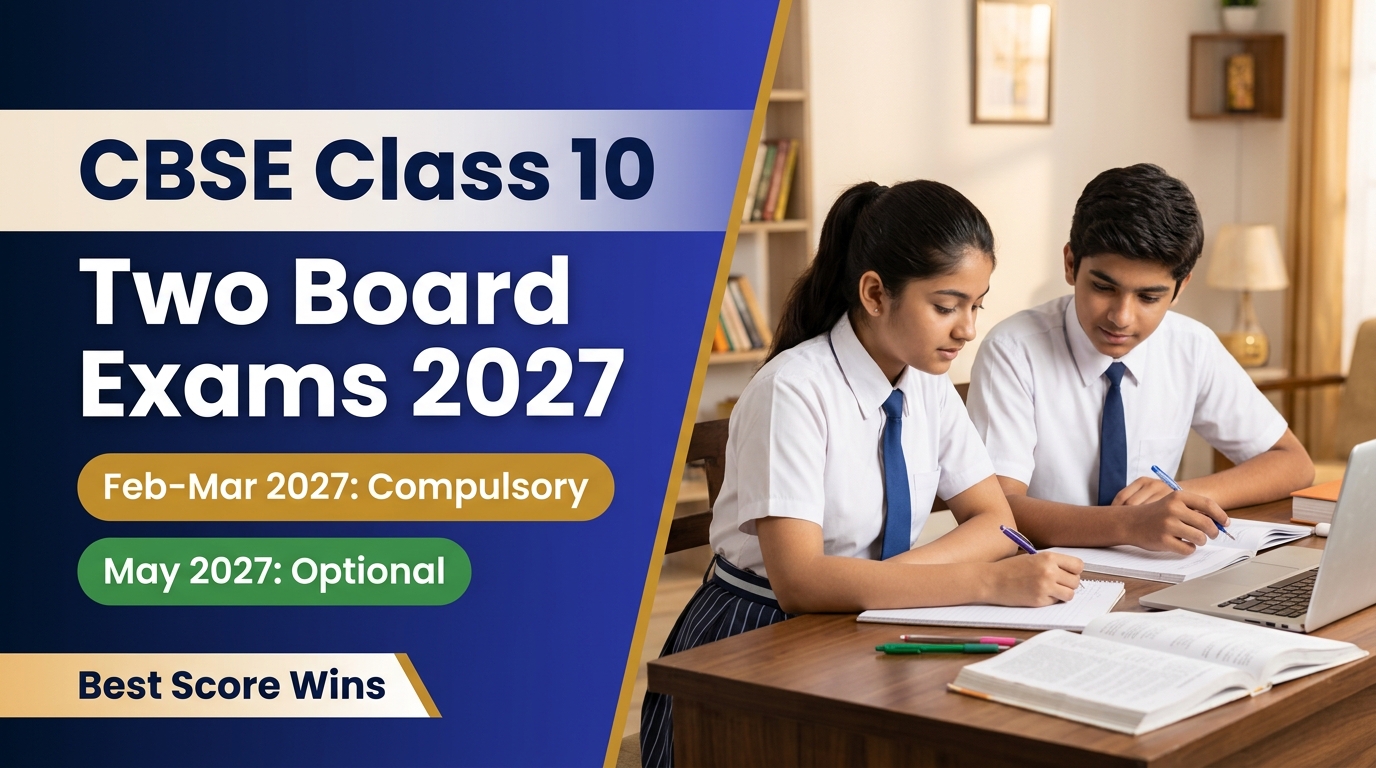
The short answer, from the CBSE Official Scheme, is: no. The first exam is mandatory. The second is an option for students who want it, not an obligation for all.
What follows is a plain explanation of how the system works, when the second exam makes sense, and when skipping it is the right call.
How the two-exam system works
CBSE introduced the two-exam structure to give students a second opportunity without repeating the entire year. The logic is straightforward: sit the first exam, see the result, and then decide whether the second exam is worth your time.
| Exam | When | Who must appear | Subjects |
|---|---|---|---|
| Phase 1 (First Exam) | February to March 2027 | Every Class 10 student | All subjects, full syllabus |
| Phase 2 (Second Exam) | May 2027 | Optional for those who appeared in Phase 1 | Up to three subjects (theory only) |
Four rules govern the entire system:
- First exam is compulsory: Every Class 10 student must sit the February to March exam. There is no opt-out.
- Second exam is optional: Only students who appeared in the first exam are eligible. No student is required to give it.
- Best-score rule applies automatically: CBSE takes the higher of the two attempts per subject for the final marksheet. No application or request is needed.
- Practicals happen once: Internal assessment and practical marks (the 20-mark component) are fixed in the first exam cycle and carry forward. Only the 80-mark theory paper is reattempted in the second exam.
The best-score rule means the second exam carries zero downside. If a student scores 68 in Maths in February and 74 in May, the marksheet shows 74. If they score lower in May, the February score of 68 stands. CBSE applies this automatically.
The 2027 timeline: what happens when
| When | What happens |
|---|---|
| September 2026 | Schools submit List of Candidates (LOC), finalising subject choices. Right time to begin structured board preparation using a 6-month timetable from September. |
| November 2026 to January 2027 | Practical exams and internal assessment window. These 20 marks per subject are finalised here and carry forward to the second exam. They are not redone. |
| February to March 2027 | First exam (compulsory). Every Class 10 student must appear. Full syllabus, all subjects. Expected to begin around February 15 based on the 2026 cycle. |
| April 2027 | First exam results. Students see actual marks and decide which subjects, if any, to reattempt. Provisional Class 11 admission using this result is possible now. |
| May 2027 | Second exam (optional). Up to three subjects can be reattempted. Best-score rule applies. Only theory papers are written. |
| June 2027 | Final consolidated marksheet issued by CBSE showing best-of-two score per subject. Students with provisional Class 11 admission submit this to confirm the seat. |
What the provisional admission system means for families
One of the most practically useful parts of the new structure: students do not have to choose between giving the second exam and securing a Class 11 seat. They take the April result, get provisional admission, give the second exam if needed, and confirm the seat in June with the better marksheet.
When your child should give the second exam
The best-score rule removes financial and score risk from the decision. But preparation time, registration fees, and exam stress are real. The second exam is not automatically the right choice for every student.
Give the second exam if
- Your child scored lower than expected and wants a higher percentage for competitive college admissions.
- One or two subjects are significantly below the rest of the result.
- Your child failed up to five subjects. The second exam is the structured path to clearing them without repeating the year.
- The score is just short of a stream requirement for Class 11 (for example, one mark below what the school needs for Science stream).
- Your child had a provably bad exam day: illness, misread paper, or exam-centre disruption.
Skip the second exam if
- Your child is satisfied with the first exam result.
- The result is strong enough for the Class 11 stream they want.
- Provisional Class 11 admission has already been taken in April and no mark improvement is needed.
- The preparation time conflicts with Class 11 orientation, or the child is already mentally exhausted after the first exam.
Important: failed subjects and the second exam
Under the CBSE scheme, if a student fails up to five subjects in the first exam, they are placed in the improvement category for the second exam. This is not a separate compartment process. The second exam is the structured path back. If a student fails more than five subjects, a different process applies. Check with your school directly for that scenario.
Does giving the second exam delay Class 11 admission?
No, and this is one of the most practically useful parts of the new system.
First exam results arrive in April 2027. Most schools in Gurugram begin Class 11 provisional admission between April and May, based on Class 10 performance. Students can use the April first-exam result to secure a provisional seat. They do not need to wait for the June second-exam result.
Once the final consolidated marksheet arrives in June (showing best-of-two scores per subject), students submit it to confirm the admission they took provisionally in April. A student who gave the second exam and improved their result will use that better marksheet for the confirmation, without having lost their Class 11 seat in the meantime.
Confirm the exact provisional admission timeline with your child's target school in February, before the first exam results are out. Schools handle the mechanics slightly differently.
How knowing about the second exam should and should not change Phase 1 preparation
The second exam should not reduce urgency for the first. This is the most common mistake families make.
Treating the second exam as a safety net that makes Phase 1 preparation optional is a trap. A student who enters the first exam underprepared will face a stressful April, a disrupted start to Class 11 orientation, and a second exam that feels high-stakes rather than low-pressure. The second exam is most useful to a student who prepared seriously for the first exam and ran into an unexpected result in one or two subjects, not to a student who is counting on it to replace a year of preparation.
One thing the second exam genuinely changes
Exam-day anxiety in the first attempt. A student who knows there is a no-risk second opportunity available tends to approach the first exam with slightly less pressure, which for many students improves first exam performance. The option is worth knowing about even if it is never used.
The right approach is to treat the first exam as the only exam that matters, prepare fully using a structured September-to-February timetable, and revisit the second exam decision only after the April result. That decision then becomes specific and practical: which subject, how much can it realistically improve, is the disruption to Class 11 start worth it. That is when the decision is useful. Right now, it is a distraction from Phase 1 preparation.
How a tutor helps with the two-exam system
A tutor who joins in September builds a clear picture of which subjects and chapters are genuinely weak versus which are only unfamiliar. By the time the first exam is over, that tutor knows exactly where a Phase 2 effort should go and can plan three to four weeks of targeted work on one subject rather than a full revision of everything.
This is more useful than a tutor who joins in April, after the first results are out, with no prior knowledge of the child's preparation history. For the two-exam system to work in a student's favour, the preparation relationship needs to start before the first exam, not after it.
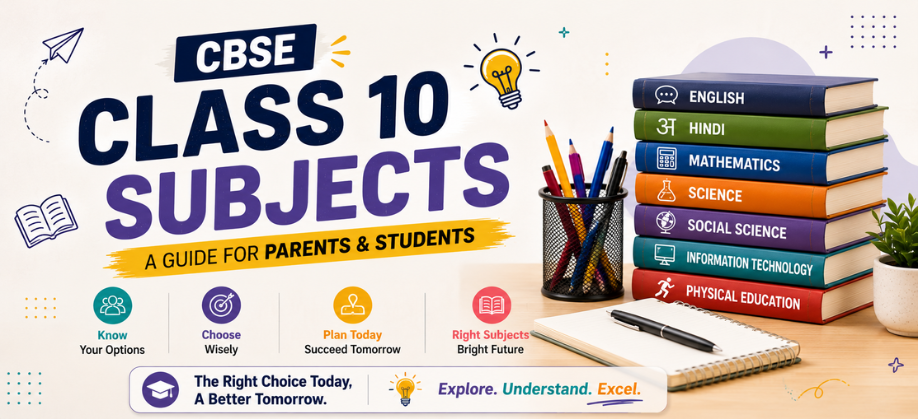
A subject-by-subject breakdown of where Class 10 marks are typically lost is in our CBSE Class 10 subjects guide. For managing the stress of two exam cycles in one year, the approach in our exam stress management guide is worth reading before the first exam begins.
What to do this week
- Read the CBSE Official Scheme: The CBSE Board Exam Policy document is publicly available and clearly explains both exam phases, the best-score rule, the subject limit, and what happens if a student fails subjects. Ten minutes with this document removes most of the confusion circulating in parent groups.
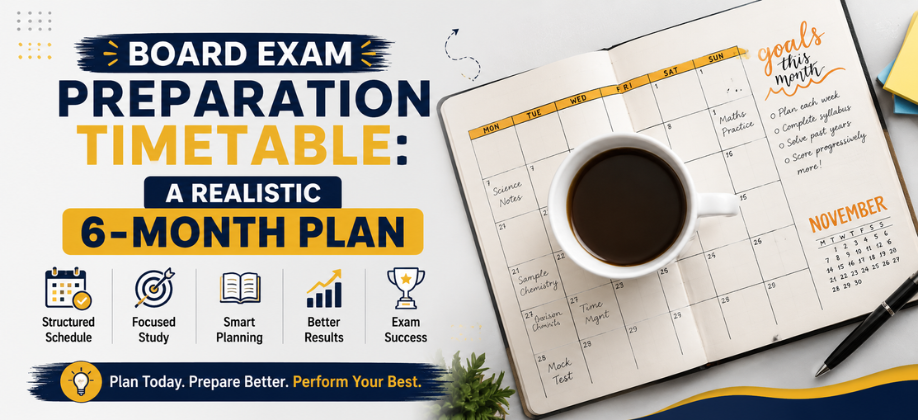
- Start Phase 1 preparation now: September is the right month to start a structured board plan. The 6-month timetable built from September allows enough time for syllabus completion, two revisions, and a full sample-paper run before February.
- Make the second exam decision in April, not now: Reserve the decision about Phase 2 until the first exam results are in hand. At that point, the choice is based on actual marks in specific subjects, not hypothetical anxieties. That is when the decision is useful. Right now, it is a distraction from Phase 1 preparation.
The two-board-exam system is genuinely student-friendly once the rules are clear. The best-score rule makes the second attempt a low-pressure option rather than a high-stakes retake. But it helps most the students who treated the first exam seriously, not those who leaned on it as a reason to prepare less.