What GRAP Actually Says About Schools, Stage by Stage
The Graded Response Action Plan is a four-stage set of restrictions for Delhi NCR, and the current version of the schedule was notified on 29 September 2026. The Commission for Air Quality Management, usually called CAQM, invokes a stage for the whole region. Each stage adds to the ones below it, so at Stage 3 every Stage 1 and Stage 2 restriction is also in force.
| GRAP Stage | Delhi AQI | What Changes for Schools |
|---|---|---|
| Stage 1, Poor | 201 to 300 | No change to classes. Schools are expected to follow winter action plan steps such as controlling dust around the campus. |
| Stage 2, Very Poor | 301 to 400 | No change to classes. Many schools cut outdoor assembly and sports on their own. |
| Stage 3, Severe | 401 to 450 | Classes up to Class 5 move to hybrid mode in Delhi and the four NCR districts, Gurugram included. |
| Stage 4, Severe Plus | Above 450 | Classes 6 to 9 and Class 11 also move to hybrid mode. State governments may order a fuller closure as an emergency step. |
Two things in that table surprise parents every winter.
The first is that a bad-air headline does not by itself change your child's school day. Stage 2 has been running since 2 November and schools have stayed open throughout. On 5 November the Delhi average sat at 369 and on the morning of 6 November it was close to 385, with individual stations in the severe band, and Gurugram has been in the very poor category for a third day. Forecasts point to poor or very poor air until around 8 November. That makes Stage 3 a real possibility this month, not a certainty.
The second is that the sub-committee can invoke a stage in advance if the forecast says the air will stay at that level for several days. So an order can arrive on a morning when the number on your phone has not yet crossed the line.
Who Decides Whether Your Child's School Goes Online
There are three separate decisions, and parents usually hear about them in the wrong order:
- CAQM decides the GRAP stage for the whole of Delhi NCR. That is the headline you see on the news.
- The district then decides what happens to schools. In Delhi the Directorate of Education issues the circular. In Gurugram it is the Deputy Commissioner's office (Gurugram district administration). This is why Noida and Gurugram sometimes look different on the same day with the same regional stage.
- Your school then decides how to run its own timetable inside that order, and that is the part that affects your evening. Schools also act on their own well before any order arrives. Cutting the morning assembly, moving sports indoors and shifting the junior section online for a few days are all decisions a Gurugram school can take by itself.
Last year's sequence is a useful guide. On 13 November 2025 the Gurugram Deputy Commissioner moved classes up to Class 5 to hybrid mode after Stage 3 was invoked, and left the choice of mode to parents. In November 2024, during a worse episode, the district suspended physical classes for all students up to Class 12 for several days and ran everything online. Both were district orders, issued within a day of the regional stage changing.
How to Verify an Order in Ten Minutes
Every smog week produces a screenshot that says all schools are closed until further notice. Most of them are old. Check three places and nothing else:
The GRAP Stage
CAQM publishes its orders with an official date. That tells you which stage is in force for NCR.
The District Order
The Gurugram district administration website and the Deputy Commissioner's official social media carry the school order. A real order has an issuing office, an order number and a date.
Your School Circular
The school app, the official email or the circular tells you what your class is doing tomorrow. This is the only one that answers your actual question.
A forward is almost certainly stale if it has no order number, no date, no issuing office, or if it says “all schools closed” without naming a class range. The real orders are specific: they name the classes and they name the mode.
One more habit worth building: Save the school's circular page and the district handle now, in a calm week, rather than searching for them at 7 am on a morning when the bus is already late.
What Hybrid Mode Means in Practice, Class by Class
- Classes 1 to 5: At Stage 3 both modes run. The school stays open, the online class also runs, and you choose. Most Gurugram schools send a form or a message by the previous evening asking which mode your child will use.
- Classes 6 to 9 and Class 11: These move to hybrid only at Stage 4. Until then, a normal school day continues even on a severe-air morning.
- Classes 10 and 12: In every recent episode these two years were kept offline, because pre-boards, practicals and board preparation are running. Do not assume a test is cancelled because the air is bad. Schools in Delhi NCR have held pre-boards right through smog weeks. Confirm with your school rather than with the group.
Now the honest part, which no order mentions: a hybrid day is usually thinner than a normal school day. The teacher is handling a split room, half in front of her and half on a screen, and the pace drops. The homework, meanwhile, stays the same. That gap is where two weeks of hybrid quietly turns into a month of catching up, and it is the only thing in this post you can actually control.
Protect Your Child's Learning Continuity Through Winter Smog
Whether classes shift online or stay hybrid, our background-verified tutors provide structured 1-on-1 support at home or live online across Gurugram & Delhi NCR.
A Study Plan for a Hybrid or Online Week
The plan below is built for the thing that really goes missing online, which is writing. Children listen in an online class. Very few write in one.
Keep the school timing and change only the location. Same wake-up time, child dressed and at the desk before the first class, books out. A pyjama day on the sofa with the laptop on a cushion costs more than the smog does.
Then build the day in three blocks:
| Class Range | Live Classes | Own Study Block | Written Practice |
|---|---|---|---|
| Classes 1 to 5 | As scheduled | 20 to 30 minutes of reading aloud | 20 minutes of handwriting or sums |
| Classes 6 to 8 | As scheduled | 45 minutes on the weakest subject | 45 minutes, one exercise finished fully |
| Classes 9 and 10 | As scheduled | 1 hour | 1.5 hours, with a full question set twice a week |
| Classes 11 and 12 | As scheduled | 1.5 hours | 2 hours, with one timed paper a week |
One rule holds the whole thing together: Every online class ends with ten minutes of writing by hand, on paper, from memory. Not notes copied off the screen. If your child can write six lines about what the class covered, the class happened. If not, it did not, whatever the attendance record says.
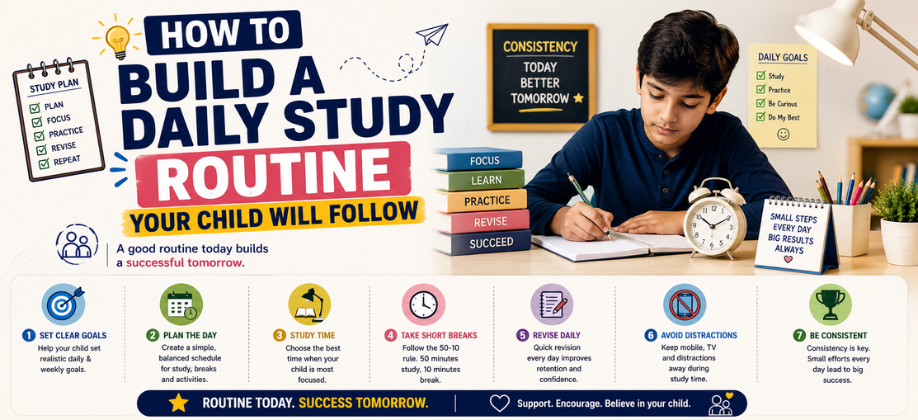
What to leave alone: A smog week is a bad time to add a new subject, a new app or a new tutor. Protect the routine you already have. Our guide on building a daily study routine has sample timetables for Classes 5 to 8 and 9 to 12 that you can shift by an hour without rebuilding.
If a tutor cannot travel on a severe-air day, move that class online instead of cancelling it, and ask for a written worksheet after the class rather than only a verbal recap. Some subjects take to the screen better than others, and our comparison of online and offline tuition sets out which ones need a tutor in the room. Families across Sohna Road, DLF Phase 5 and New Gurugram ran their winter classes this way last year with no gap in the schedule.
Keeping the Indoor Day Usable
You cannot fix the city's air from your flat, but a few things measurably change the air in the room your child sits in for nine hours:
- Pick one room as the study and sleep room, and treat it as the clean room. Keep its windows shut through the morning peak, which is usually the worst stretch, and air the flat briefly in the afternoon if the numbers dip.
- Cut the indoor sources during these weeks. Incense, mosquito coils and kitchen smoke with the door open all add to what is already in the room. This matters more than most gadgets.
- If you own an air purifier, run it in that one room with the door shut rather than moving it around the house. If you do not own one, a closed room with fewer indoor sources is a better use of the week than a rushed purchase.
- Do not let exercise disappear, because that is what makes children sleep. Move it indoors. Skipping, stairs and floor exercises work. The morning run and outdoor games can wait for a better week.
- On the commute, a properly fitted N95 or similar mask does more than a cloth one. And if your child has asthma or any ongoing breathing problem, talk to your paediatrician about how to handle the week rather than deciding on your own, and keep the online option open even on days when the school is running normally.
If Pre-Boards or Practicals Fall in a Smog Week
This is the question that matters most in November and December, so here is what is actually known:
- Pre-board exams are set and conducted by individual schools, not by CBSE, which means the school decides whether to go ahead. Most Gurugram schools have held them on schedule through bad-air weeks. Our pre-board guide for Class 10 and 12 parents covers the December and January window and what the marks do and do not decide.
- Practical exams need the lab, so they almost never move. For most CBSE schools the practical window is expected to run from 1 January 2027, and winter-bound schools hold theirs in November and December. CBSE usually issues the detailed practical instructions in December.
- The CBSE date sheet 2027 for Classes 10 and 12 had still not been released as of 6 November 2026. Once it is out, plan the gap days from it rather than from a forecast. We track the status on our CBSE date sheet 2027 page.
If your child does miss days, do two things in writing: Ask the school for the recorded class or the notes for those days, and ask for the revised test date. A verbal answer in the corridor is not something you can plan around.
What a Hybrid Fortnight Really Costs, and What Recovers It
Two weeks of hybrid classes is not a lost term. What gets lost is narrower than parents fear and more specific: written practice, doubt-clearing and the small corrections a teacher makes while walking past a desk.
The recovery is equally specific. One extra written question set a week for three weeks, marked strictly, closes most of a two-week gap for Classes 9 to 12. For younger classes, twenty minutes of handwriting a day does it. A crash plan in January does not, which is why this is worth starting in the same month the air goes bad.
Watch for three signs that the gap has grown past what the evening can fix:
- Homework going unchecked for two weeks
- The same chapter sitting unfinished for a month
- Test marks dropping a full band rather than a few marks
If you are seeing those in a board year, our six-month board exam timetable shows what November and December should look like for Classes 10 and 12, and one-to-one help for Classes 9 and 10 is easier to arrange now than in the last week of December, when most good tutors in Gurugram are already booked.
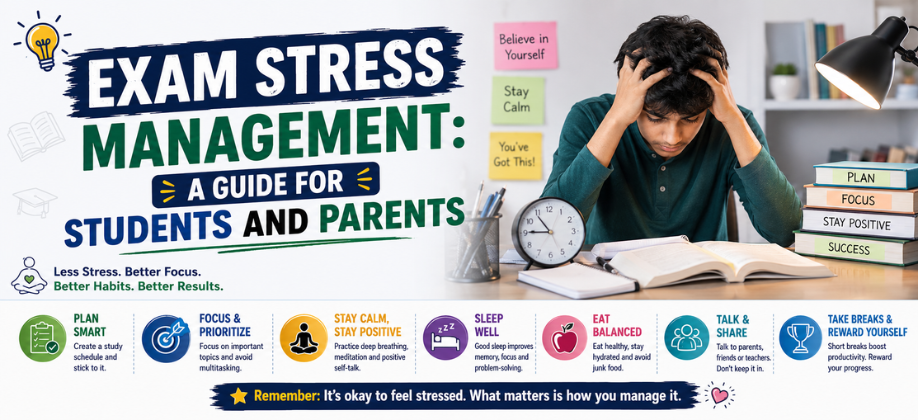
If the smog week is also producing arguments at home, the problem is often tiredness rather than attitude, and our note on managing exam stress is worth ten minutes.
What to Do This Week: Parent Action Checklist
Today
Bookmark the CAQM orders page and your school's circular page, and save the Gurugram district administration handle. These are the only three places worth checking on a bad morning.
Today
Send your school one written question: if Gurugram moves to Stage 3 or Stage 4, how will my child's class run, and will scheduled tests be rescheduled? Ask before the order arrives, not after.
This Week
Fix one room as the study and sleep room. Move the desk away from the window that faces the main road, and keep that room's windows shut through the morning.
This Week
Write the three-block routine from the table above on a sheet of paper and stick it where your child studies. Do not build it into an app.
Before Next Online Day
Tell your child the one rule: ten minutes of writing by hand at the end of every online class.
This Weekend
For Classes 9 to 12, one full written question set under a clock. For younger classes, twenty minutes of handwriting a day, no more.
Frequently Asked Questions
Are Gurugram schools closed today because of pollution?
As of 6 November 2026, GRAP Stage 2 is in force across Delhi NCR and Gurugram schools are open with normal classes. A change of mode starts at Stage 3 and above, and the order for Gurugram schools comes from the Deputy Commissioner's office. Check the district order and your school's circular rather than a forwarded screenshot.
At what AQI do schools go online in Gurugram?
Under the revised GRAP schedule, Stage 3 applies when Delhi's AQI is between 401 and 450 and moves classes up to Class 5 to hybrid mode. Stage 4 applies above 450 and extends hybrid mode to Classes 6 to 9 and Class 11. The sub-committee can also invoke a stage earlier if the forecast says the air will stay at that level for several days.
Will Class 10 and Class 12 classes also go online?
Usually not. In recent episodes these two years were kept offline so that board preparation, pre-boards and practicals were not disturbed. It is still a district and school decision, so confirm with your school.
Is hybrid mode compulsory for my child?
No. Hybrid means both modes run at the same time and parents choose. The school has to keep the online option working for the classes covered by the order, and you can send your child in person if you prefer.
Will pre-board exams be postponed if the air quality is severe?
Pre-boards are the school's decision, since the school sets and conducts them. Most schools have held them on schedule through bad-air weeks. If your school does move a date, ask for the new one in writing.
Can home tuition continue on a severe-air day?
Yes. Moving the class online for a week is better for continuity than cancelling it, particularly in a board year. Ask the tutor to send a written worksheet after each online class so the writing practice does not disappear along with the travel.