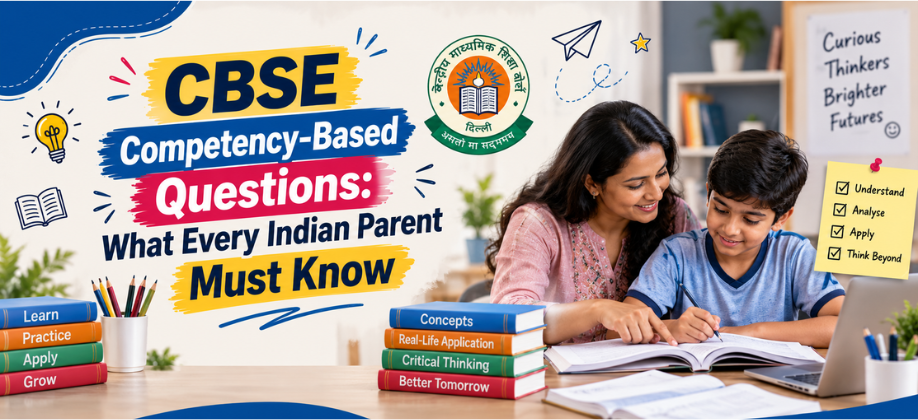
CBSE competency-based questions are no longer something students can afford to ignore. For Indian parents, especially those with children in Classes 9, 10, 11, and 12, the biggest change is not necessarily a completely new syllabus, it is the growing emphasis on applying concepts, interpreting information, analysing situations, and using knowledge instead of simply memorising textbook answers.
CBSE has formally moved towards competency-based assessment. In its official documents, the Board has stated that around 50% of questions in CBSE papers are competency-based, with a focus on higher-order thinking and conceptual understanding. CBSE also reported that 50% competency-based questions were introduced in the 2025 examinations.
For parents across India, this means one important thing: studying only by memorising NCERT answers is no longer enough.
This guide explains what competency-based questions actually mean, what types of questions students can expect, how they differ from traditional questions, and how parents can help children prepare effectively.
What Are Competency-Based Questions?
Competency-based questions test whether a student can use what they have learned in a new or practical situation.
In a traditional question, a student may be asked to recall a definition, formula, explanation, or textbook-based answer. A competency-based question may provide a situation, graph, table, passage, experiment, data set, or real-life problem and then ask the student to apply a concept to reach the answer.
Example: Traditional vs Competency Question
“What is Ohm's Law?”
or“Define Osmosis and give two examples.”
“A circuit diagram provides varying voltage and resistance values under different conditions. Calculate current and explain what happens when one variable changes.”
or“A farmer notices crops wilting after over-fertilising the soil with salt solutions. Which biological process caused water loss in roots, and how can he reverse it?”
The concept is still the same. The difference is how the student has to use it.
What Skills Do These Questions Test?
CBSE's subject-wise question paper designs reflect this broader approach. For example, the Class 10 Science design includes knowledge and understanding, application of concepts, and higher-order skills such as analysing, evaluating, and creating. Specifically, competency-based questions assess:
- Conceptual understanding: Understanding core mechanisms rather than memorising wordings.
- Application of knowledge: Using principles in new, real-life contexts.
- Logical reasoning: Connecting cause and effect systematically.
- Analysis and interpretation: Reading graphs, charts, and experimental setups.
- Problem-solving: Breaking down complex, multi-step scenarios.
- Evaluation of information: Identifying relevant data and eliminating distractors.
- Connecting concepts with real-life situations: Relating science and maths to daily phenomena.
Why Has CBSE Increased the Focus on Competency-Based Questions?
The purpose is to move school assessment away from pure rote learning and towards understanding and application.
Students may remember a definition perfectly but still struggle when the same concept appears in an unfamiliar situation. Competency-based assessment attempts to identify whether the student can transfer classroom learning to a different context.
This approach is also aligned with the broader education reforms promoted through NEP 2020, which place greater emphasis on critical thinking, conceptual understanding, experiential learning, and application of knowledge. Higher education entrance exams in India such as CUET, JEE Main, and NEET already evaluate critical reasoning rather than simple recall. Introducing competency questions in secondary school ensures students do not struggle later.
Students don't lose marks in competency questions because the syllabus is hard. They lose marks because they aren't used to reading long scenario statements under exam pressure.
What Types of Competency-Based Questions Can Come?
There is no single format called a “competency-based question”. The competency may be tested through several different question formats:
- Case Study Questions: A short real-life or subject-related situation followed by 3–4 connected analytical sub-questions. For example, a Science question could describe an experiment and ask students to identify the observation, explain the result, and select the correct conclusion.
- Assertion-Reason Questions: These questions provide an Assertion and a Reason. Students must determine whether both statements are correct and whether the reason correctly explains the assertion.
- Data-Based Questions: Students receive a graph, table, chart, or numerical information and answer questions based on it. The student must first understand what the information represents before calculating.
- Source-Based or Passage-Based Questions: Common in Social Science and English. A passage contains information from which students have to identify facts, interpret ideas, make comparisons, or draw conclusions.
- Application-Based MCQs: Not every competency-based question is a long case study. An MCQ can also test application by presenting a situation and asking which principle applies.
Subject-Wise Examples: Maths and Science in Action
Real-World Scenario: Room Tiling and Wastage
The Problem Statement
“A family wants to install tiles in a rectangular room. The room has a given length and breadth, while each tile has a specific dimension. The student is asked to calculate the number of tiles required and determine the additional tiles needed after accounting for wastage during cutting.”
Why This Tests Competency: The question does not simply ask to reproduce a formula. It checks whether the student understands how multiple concepts link together in a real-life situation and knows when and how to use them.
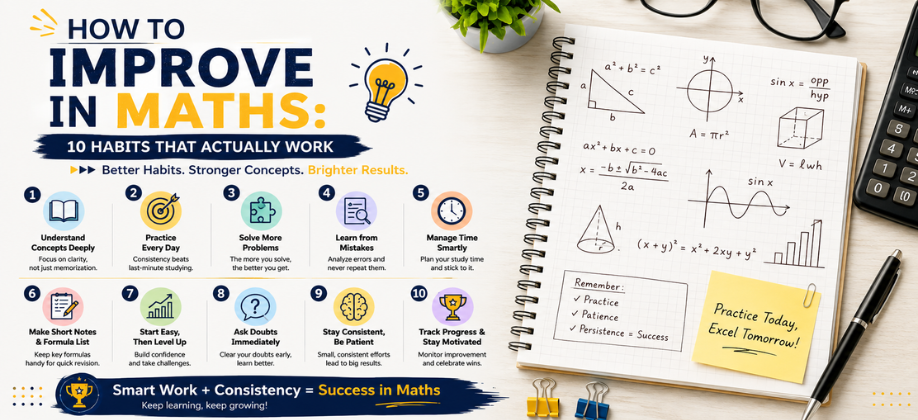
Read our guide on how to improve in Maths for the new pattern
Experimental Setup: Light Intensity and Shadow Formation
The Problem Statement
“Two objects are placed at different distances from a point light source on an optical bench. The question provides experimental observations of shadow sharpness and asks students to explain how the intensity and edge definition change when an aperture is adjusted.”
Why This Tests Competency: A student who has memorised definitions will struggle when the setup changes. A student who understands the underlying concept can analyse the observations and arrive at the right answer. Understanding must be transferable.
How Are Competency-Based Questions Different From Old-Style Questions?
| Traditional Approach | Competency-Based Approach |
|---|---|
| Focuses heavily on recall and memorisation | Focuses on understanding and practical application |
| Often follows familiar textbook wording | May use an unfamiliar real-life situation |
| Direct questions are common | Case, data, passage, and application questions are common |
| Memorised answers can sometimes work | Students need to understand the underlying concept |
| Practice often means repeating similar questions | Practice should include different contexts and scenarios |
This does not mean that traditional knowledge-based questions have disappeared. Students still need strong subject knowledge. The important change is that knowledge increasingly needs to be applied.
Does 50% Competency-Based Mean 50% of the Paper Will Be Case Studies?
No. This is one of the biggest misconceptions parents should avoid.
“50% competency-based” does not mean that half of the paper will necessarily consist of long case studies. Competency can be assessed through different formats, including MCQs, assertion-reasoning questions, short-answer questions, case-based questions, source-based questions, and data-based questions.
CBSE's official question paper designs demonstrate this variety. For Class 10 Science, for example, the listed typology includes objective questions, assertion-reasoning questions, short-answer and long-answer questions, as well as source-based, case-based, passage-based, and integrated assessment questions.
What Does This Mean for Classes 9, 10, and 12?
What Does This Mean for Class 9 Students?
Class 9 is an important transition point because students should begin developing the habits needed for Class 10 and beyond. Parents should encourage students to:
- Understand concepts before memorising answers.
- Explain topics in their own words.
- Solve unfamiliar questions.
- Read graphs, tables, and passages carefully.
- Ask “why” and “how” instead of only “what”.
Building these habits early makes Class 10 preparation considerably easier.
What Does This Mean for Class 10 Students?
For Class 10 students, competency-based preparation becomes especially important because the Board examination directly tests the ability to use concepts in different question formats. Students should combine:
- NCERT reading for conceptual foundations.
- Chapter-wise practice for understanding.
- Competency-based questions for application.
- Sample papers for exam familiarity.
- Timed tests for speed and accuracy.
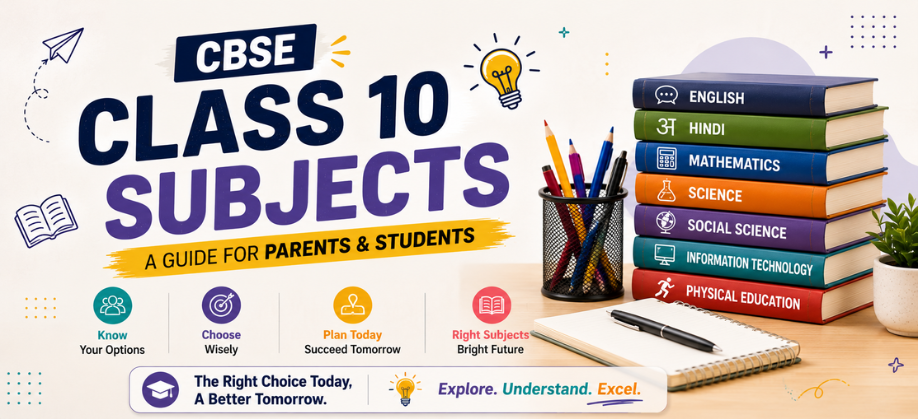
For a broader overview of Class 10 subjects and preparation, read our Class 10 subjects and syllabus guide.
What Does This Mean for Class 12 Students?
Class 12 students need to go one step further because many subjects require students to interpret information, apply principles, and structure answers logically.
Students should pay particular attention to case-based questions, numerical application, data interpretation, source-based questions, reasoning-based MCQs, and higher-order questions. Regular practice with official sample papers, marking schemes, and previous papers from the official CBSE website is essential.
How Should Students Prepare for CBSE Competency-Based Questions?
- Start With NCERT, But Don't Stop There: NCERT remains the foundation for CBSE preparation. Students should understand every important concept, definition, diagram, example, and application. After completing a chapter, practise questions that present the same concept differently.
- Practise “Why” and “How” Questions: Instead of only asking “What is this?”, ask: Why does this happen? How can this concept be applied? What would happen if one condition changed? Can I explain this without looking at the textbook?
- Solve Case Studies Regularly: Case-study questions can initially look intimidating because of their length. Regular practice teaches students to identify the key information, the concept being tested, and the exact question asked.
- Analyse Mistakes, Not Just Marks: If a student gets 7 out of 10 questions correct, identify whether mistakes happened because of weak concept understanding, careless calculation, misreading the question, or poor time management.
- Use Timed Practice: Competency-based questions require more reading and thinking. Practising unfamiliar questions under time limits builds exam speed.
Common Mistakes Parents Should Avoid
- Mistake 1: Assuming Memorisation Is Enough: Memorising definitions cannot replace conceptual understanding in applied questions.
- Mistake 2: Making Students Solve Only Repetitive Questions: If every question looks identical, the student learns a pattern rather than the concept.
- Mistake 3: Ignoring Reading Skills: A student can know the formula and still lose marks because they misread a long question.
- Mistake 4: Starting Sample Papers Too Late: Competency questions should be practised chapter by chapter from the start of the year, not just in January.
A Simple Weekly Strategy for Indian CBSE Students
A practical weekly routine can look like this:
| Day | Focus |
|---|---|
| Monday–Tuesday | Learn and understand new concepts |
| Wednesday | NCERT examples and textbook questions |
| Thursday | Competency-based and application questions |
| Friday | Case studies, MCQs, and reasoning questions |
| Saturday | Timed chapter test |
| Sunday | Mistake analysis and revision |
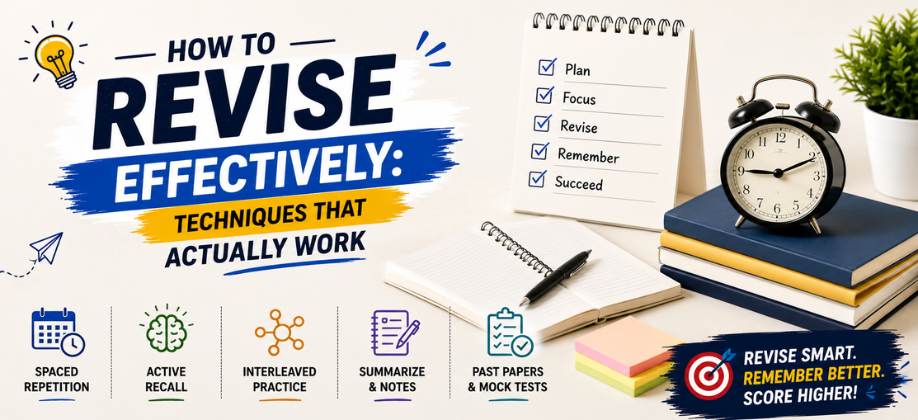
Students who struggle with revision can also read our guide on effective revision for competency-based questions.
How Parents Can Identify Whether Their Child Is Ready
Instead of asking only, “How many chapters have you finished?”, parents can ask questions such as:
- Can you explain this concept without reading the book?
- Can you solve a question if the wording changes?
- Can you apply this formula to a real-life situation?
- Can you interpret a graph or table?
- Can you explain why your answer is correct?
If the answer is consistently yes, the student is developing the type of understanding that competency-based assessment is designed to measure.
Do Students Need a Different Kind of Tuition for the New Pattern?
Not necessarily a completely different kind of tuition, but they do need a teaching approach that goes beyond dictating answers.
A good CBSE-focused tutor should help students move through three stages:
- Understand: Learn the concept clearly.
- Apply: Use the concept in unfamiliar situations.
- Evaluate: Analyse mistakes and improve the approach.
This is particularly important for students who understand classroom explanations but struggle when questions are presented in case-study format. Parents looking for structured support can explore Class 9–10 tuition in India designed around CBSE preparation and application-based learning.
Final Takeaway for Indian Parents
The shift towards competency-based assessment does not mean that CBSE preparation has become impossible. It means that the definition of “good preparation” is changing.
A well-prepared student should be able to understand a concept, explain it, apply it to a new situation, analyse information, and justify an answer. For Classes 9, 10, 11, and 12, parents should focus less on how many pages a child has memorised and more on whether the child can solve a question when the wording, context, or information changes.